28 June 2016

BOOK REVIEW: Saturn Run by John Sandford

Saturn RunSaturn Run by John Sandford
My rating: 4 of 5 stars

The year is 2066. A Caltech intern inadvertently notices an anomaly from a space telescope—something is approaching Saturn, and decelerating. Space objects don’t decelerate. Spaceships do.

A flurry of top-level government meetings produces the inescapable conclusion: Whatever built that ship is at least one hundred years ahead in hard and soft technology, and whoever can get their hands on it exclusively and bring it back will have an advantage so large, no other nation can compete. A conclusion the Chinese definitely agree with when they find out.


The race is on, and an remarkable adventure begins—an epic tale of courage, treachery, resourcefulness, secrets, surprises, and astonishing human and technological discovery, as the members of a hastily thrown-together crew find their strength and wits tested against adversaries both of this earth and beyond. What happens is nothing like you expect—and everything you could want from one of the world’s greatest masters of suspense.

----- --- -------


A great book, no doubt about it, and probably one of the more "solid" novels that I've read in years. By that, I mean that it kept my attention firmly from beginning to end and left me feeling satisfied. It's a combination of techno-thriller and hard sci-fi and, while I know that could sound rather heavy, it actually works well and flows superbly. I reckon that if Larry Niven and Tom Clancy were to have collaborated on a book it would've come out something like this. The sci-fi elements (which are almost space-opera in flavor) were nothing outstanding but solid nonetheless, and from this I get the feeling that this book is aimed more at a general audience rather than the dedicated sci-fi crowd. In general, there's not a whole lot to criticize, the subject matter and plot are great, it's written very well and the story moves about from scene to scene seamlessly. The characters are excellent as is the dialogue, and there's no shortage of all of the good stuff including a fair dose humor along the way as well, which was actually one of my favorite aspects of the book. The only reason that I didn't give it the fifth star was that I was expecting a big and surprising twist which never eventuated. As I said, I still felt satisfied with the end, but it felt like it was building up to something bigger. That should not put anyone who enjoys a good thriller from reading it, and I reckon it's not likely to disappoint.

----- --- -------
View all my reviews


20 June 2016

BOOK REVIEW: Helix Wars (Helix #2) by Eric Brown

Helix WarsHelix Wars by Eric Brown
My rating: 3 of 5 stars

Helix Wars, sequel to the best-selling Helix is a fast-paced adventure novel about the ultimate threat to the Helix itself and to humanity, whose role it is to protect it.

The Helix: a vast spiral of ten thousand worlds turning around its sun. Aeons ago, the enigmatic Builders constructed the Helix as a refuge for alien races on the verge of extinction.


Two hundred years ago, humankind came to the Helix aboard a great colony ship, and the Builders conferred on them the mantle of peacekeepers. For that long, peace has reigned on the Helix. But when shuttle pilot Jeff Ellis crash-lands on the world of Phandra, he interrupts a barbarous invasion from the neighbouring Sporelli - who scheme to track down and exterminate Ellis before he can return to New Earth and inform the peacekeepers.

Helix Wars, sequel to the best-selling Helix, is a fast-paced adventure novel about the ultimate threat to the Helix itself.


----- --- -------

Following on from the earlier book Helix, where a human starship crashes onto a huge and spectacular helix shaped construct containing thousands of worlds, Helix Wars continues the story a couple of hundred years later. It's a good yarn, no doubt about it, but this was definitely my least enjoyed Eric Brown story to date. The reason for this is not so much with the delivery, which is typically good, but I was surprised to find myself rushing a little and trying to avoid text skipping during a large portion of the book. This is the first time I've experienced this while reading Brown's work. I think I know why, many of the action sequences were just a tad painful, and certainly felt like the author was positioning them in the story for the sake of having action, not so much because they'd add to the story, which I guess in general they did, it's just that it was a bit too much. I don't remember Helix being like this. With all that said, the tale itself is good, and contains the usual Eric Brown epic scale and wonder, huge alien artifacts, species and cultures, lots of good sci-fi stuff. It's certainly advisable to read Helix first, as this introduces much of the background information and characters that have roles in this book. The conclusion is okay with enough room left for further expansion, etc. and I sense that there could be further Helix stories in the future. Mostly recommended, mainly if you enjoyed Helix, but it's not a book that I would steer a first time Eric Brown reader toward.

----- --- -------
View all my reviews


05 June 2016

The Chinese Government is Setting Up Its Own Major Science Fiction Award

by Andrew Liptak

This is pretty interesting: during the latest national congress of the China Association for Science and Technology, chairman Han Qide announced that the country would be setting up a program to promote science fiction and fantasy, including the creation of a new major award.

Throughout much of its genre’s history, China’s science fiction has had a legacy of usefulness, often promoted to educate readers in concepts relating to science and technology. This new award will be accompanied by an “international sci-fi festival” and other initiatives to promote the creation of new stories.

In the last couple of decades, China has enjoyed an unprecedented boom when it comes to science fiction. Since the 1990s, dozens of authors have broken out and written a number of high profile books, creating a viable community. Every year, Chinese science fiction magazine Science Fiction World issues its own major award, the Galaxy.
The Three Body trilogy by Liu Cixin
This is particularly exciting news, given the increases that we’ve seen in science fiction coming from China. Authors such as Liu Cixin, Chen Quifan, Xia Jia, and others have had their works translated into English frequently, while Liu Cixin’s novel The Three Body Problem earned the Hugo Award for Best Novel last year.

With more works coming to English readers this year, such as Death’s End - the concluding volume of the Three Body trilogy - and Ken Liu’s anthology of translated stories Invisible Planets, greater support for science fiction will hopefully translate into a wealth of new stories.

Given the quality of the stories that have been written already, this could be the start of a promising new wave of exciting new fiction for readers across the world.


25 May 2016

BOOK REVIEW: Flames Over Norway by Robert Jackson

Flames Over NorwayFlames Over Norway by Robert Jackson
My rating: 3 of 5 stars

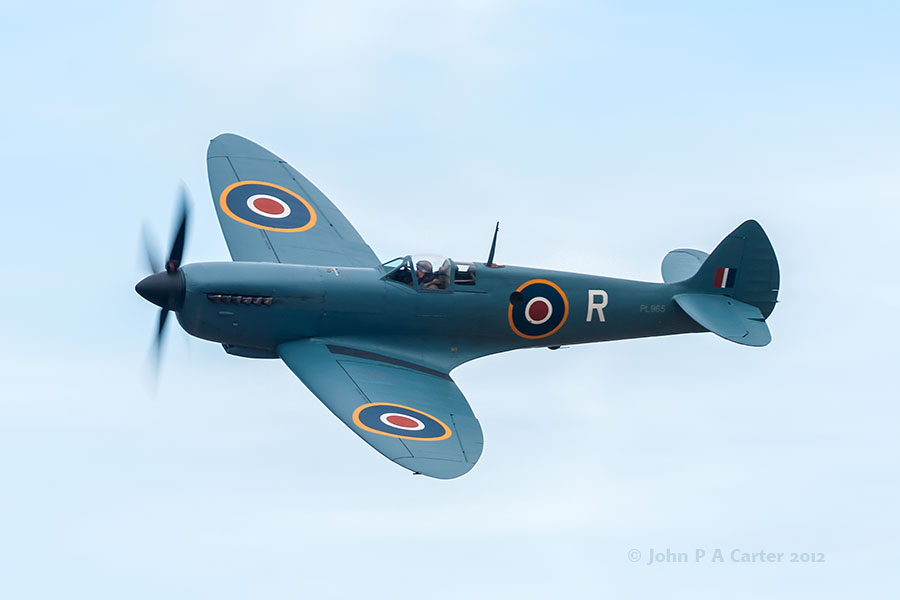
Pilot Officer Ken Armstrong is one of a small and select band of Spitfire pilots. 

In the winter of early 1940, freezing in their cramped cockpits, the pilots set out to photograph German targets that will be attacked when the ‘Phoney War’ gives way to a shooting war — the heavy industries of the Ruhr Valley and, above all, warships of the German Navy, standing ready to break out into the Atlantic and prey on Britain’s vital convoys. 

Suddenly, in the early days of April 1940, an armada of German warships begins to move from the north German ports. Armstrong and his fellow pilots have the task of shadowing them, and soon establish that the invasion of Norway is beginning. 

Shot down during a photo-recce sortie over Norway, Armstrong finds himself fighting with Allied ground forces before reaching an RAF fighter squadron operating from a frozen lake in the far north. 

He is soon involved in an amazing intrigue with Norwegian government officials, desperate to salvage Norway’s remaining gold reserves and fly them to England. 

Finding an aircraft capable of doing the job is a problem — which Armstrong and his new friends set about solving. The obvious answer is to steal one from under the noses of the conquering Germans

----- --- -------

This is the second book by this author that I've read, and my experience was similar. Flames Over Norway is set during the very early stages of World War Two, and the central character is a young reconnaissance pilot who flies dangerous photographing missions over enemy territory in an unarmed aircraft. The story moves along quite well and describes the scene very well, almost documentary style in places with the author filling in the background tactical situation of the posturing armies and air forces. As the title suggests, the largest section of the story takes place in Norway, where the German forces are trying to gain a foothold due to the valuable strategic nature of their shipping ports, essential for their naval vessels trying to get to the North Atlantic. The story turns more into a blow-by-blow account of tussles between the local militias, British garrisons and the invading Nazi troops, and is well-written and interesting, but the story still lacks a definable overriding plot or story. There are some particularly cool naval battle scenes that I found interesting and there is a small amount of intrigue around a train load of gold that the Norwegians are desperately trying to whisk away from under the Germans' noses, but not a heavy enough plot to really engage. Had there been a bigger story at work (other than the whole World War Two thing) then this book would've been a lot harder to put down. The author's knowledge of the period and of the aircraft and hardware appears to be vast and accurate, and this lends itself to a book that is more educational than entertaining. I reckon that anyone who is an enthusiast of World War Two aviation in particular would enjoy the book, but I wouldn't recommend it to a typical reader looking for a rollicking yarn. This is a bit of a shame because the writing style is good and the story flows well enough, it's just missing that "big picture" to keep the reader firmly on the hook.

----- --- -------
View all my reviews


21 May 2016

BOOK REVIEW: Deceived (Star Wars: The Old Republic #2) by Paul S. Kemp

Deceived (Star Wars: The Old Republic, #2)Deceived (Star Wars: The Old Republic #2) by Paul S. Kemp
My rating: 3 of 5 stars

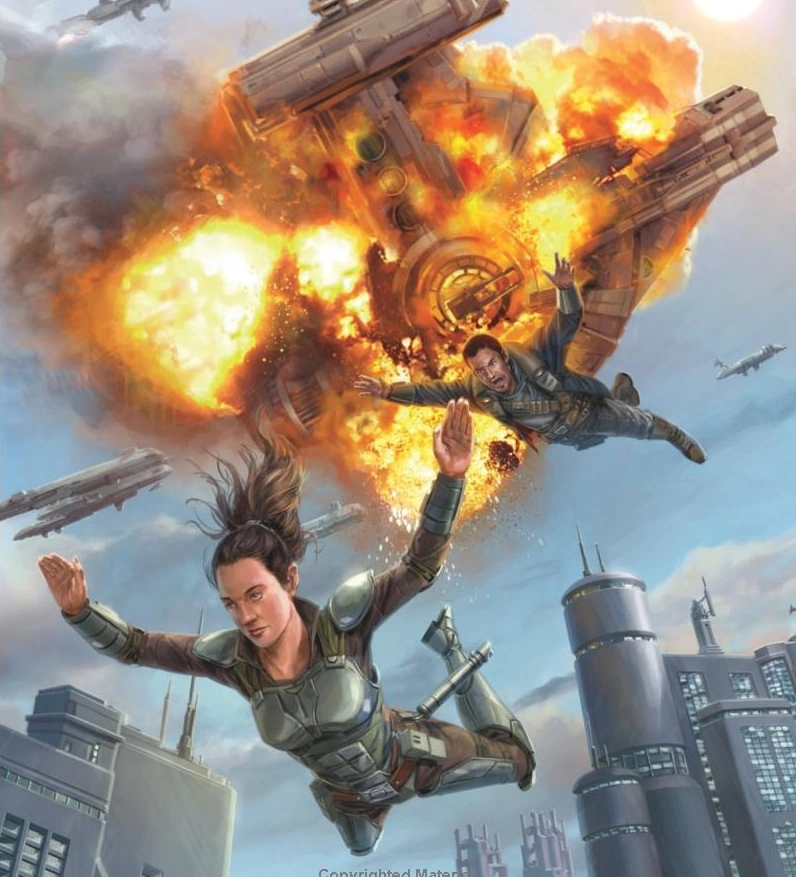
The second novel set in the Old Republic era and based on the massively multiplayer online game Star Wars: The Old Republic ramps up the action and brings readers face-to-face for the first time with a Sith warrior to rival the most sinister of the Order’s Dark Lords—Darth Malgus, the mysterious, masked Sith of the wildly popular “Deceived” and “Hope” game trailers.


----- --- -------

A well written Star Wars story set during the Old Republic era (around 3500 years before the days of Darth Vader and Luke Skywalker, etc.) and is centered around three main characters, Sith Lord Darth Malgus, Jedi Warrior Aryn Leneer and smuggler pilot Zeerid Korr. Each character is sufficiently developed to discern their inner motivations and see what drives them in their respective lives. I particularly liked following Malgus and, although generally very dark in nature, found myself enjoying his character immensely. It has a definite military sci-fi vibe within the classic space opera envelope and a story line which is nothing spectacular which ended exactly as I thought it would. But, this is totally fine and is what I was hoping it would be, that being an easy-flow, fun and action filled story set within one of the most fascinating fictional universes ever created. The world-building is good enough, but is possibly best enhanced by a prior knowledge of key Star Wars elements, ie. what an Imperial cruiser looks like, the various alien species and the planet Coruscant (where most of the book is set). I referred at times to an online Star Wars encyclopedia during my reading to gain some of the visuals. I imagine this book is read by most Star Wars fans due to the significance of Darth Malgus and his exploits in Sith folklore. It would surely also be enjoyed by the less ardent fan and general sci-fi reader, and overall it's a great fun read.


----- --- -------
View all my reviews


Are physical books back after a bad attack of "technodazzle”?

from Tor.com
by 

The book hasn’t had an easy time of it recently. Here, there and everywhere, headlines have alleged that the death of traditional print publishing is inevitable, and to date, these doom-laden declarations have been borne out by sales data that does indeed demonstrate a decline in the appetites of physical book buyers. But last week, a study by the Publishers Association revealed something surprising: that “sales of print books are rising, while digital sales are down for the first time since the invention of the e-reader.”

A couple of (clearly quite excitable) commentators have taken this to mean that “peak digital” is in the past—that the industry simply “suffered a bad attack of technodazzle” as ebook sales skyrocketed and the trade in printed editions fell commensurately.

Would that the fact of the matter was as straightforward as The Guardian’s Simon Jenkins thinks it is:
The book was declared dead with the coming of radio. The hardback was dead with the coming of paperbacks. Print-on-paper was buried fathoms deep by the great god, digital. It was rubbish, all rubbish. Like other aids to reading, such as rotary presses, Linotyping and computer-setting, digital had brought innovation to the dissemination of knowledge and delight. But it was a means, not an end.
The truth is that digital readers were never remotely in the same ballpark. […] Virtual books, like virtual holidays or virtual relationships, are not real. People want a break from another damned screen.
On his own blog, Damien Walter—he of the Weird Things—took Jenkins’ various claims to task:
If it’s fair to say that the more wishful the thinking, the less evidence it requires for celebration, then Jenkin’s thinking is the most wishful of all, as he presents hardly any evidence at all, and badly misinterprets the few data points he invokes.
A 5% rise in Waterstones’ print book sales is good news. It’s driven by colouring books sadly, a temporary hobby fad. Even with that temporary boost, Waterstones isn’t profitable. [And] the news that Waterstones has stopped selling Kindles is singularly irrelevant. If they stop selling Moleskines will that indicate the death of writing?
Jenkins killer “fact” is a fall in “digital content” sales of a few % points. Jenkins doesn’t mention that this is the same period [some] publishers jacked up the price of ebooks in an act of near criminal sabotage against their own authors.
Nor does he take into account the failure of the Publishers Association to account for the innumerable independent imprints and self-published success stories that have seen their ebook sales continue to climb.

So… what? It’s all a wash?

Well, no—it’s not that either. If anything it’s good news, because the report also found that “overall sales in the UK publishing industry sales were up to £4.4 billion in 2015, a small rise from £4.3 billion in 2014,” and that’s not even to speak of the remarkable growth of audiobooks, downloads of which increased almost 30% in that same period.

For my part, I find myself in agreement with the managing director of Penguin General Books, Joanna Prior, whose conclusions, though lacking drama, do paint a positive picture for the industry going forward:
Both the increase and decrease are too small […] for us to make any claims for big shifts in consumer behaviour or make predictions for what lies ahead. But I do think that any suggestion that the physical book is doomed can now definitively be refuted as we trade less neurotically in a more stable, multi-format world.
Could she mean that there’s a place for everyone at the party? That digital and physical editions can simply… co-exist?

Who’d have thunk it!


01 May 2016

12 Novel Adaptations That Should Get a Do-Over Reboot

Original article from io9.com

We’ve all been there: a favored book is snapped up for adaptation, with a whole lot of potential behind it: solid cast, crew, production values, etc. When it hits theaters, you walk out wishing that they’d done everything differently.

[Dune from 1984 is a classic example of this - it was complete s@#t, and is in dire need of a remake which may hopefully restore some of the honor of this classic SF novel.] --LS

It’s often said that the book is better than the movie, and there’s a long history of that being true, because the movie makers simply didn’t get what the book was about, or did any number of other things wrong.

But, the movie version of a book isn’t always inferior: just look at Blade Runner, Minority Report, Children of Men or Jurassic Park, with films that rival or even exceed their source material. It’s possible to get the book right, or to get a good version of it.

For all the complaining that people make about Hollywood not green lighting original projects, let’s face a reality: adaptations from books, reboots of old movies, and the general recycling of content will continue. With that in mind, here’s a few movies that we wish Hollywood would go back and do over again, hopefully better than before.

Read more HERE.
----- --- --------

01 April 2016

BOOK REVIEW: Arkwright by Allen Steele

ArkwrightArkwright by Allen Steele
My rating: 4 of 5 stars

Nathan Arkwright is a seminal author of the twentieth century. At the end of his life he becomes reclusive and cantankerous, refusing to appear before or interact with his legion of fans. Little did anyone know, Nathan was putting into motion his true, timeless legacy.

Convinced that humanity cannot survive on Earth, his Arkwright Foundation dedicates itself to creating a colony on an Earth-like planet several light years distant. Fueled by Nathan's legacy, generations of Arkwrights are drawn together, and pulled apart, by the enormity of the task and weight of their name.


----- --- -------


A very enjoyable book that will appeal to ardent sci-fi fans with it's many references to golden age science fiction personalities, places and events. The first half or so of the book follows the life and growing career of sci-fi author Nathan Arkwright, and it's from here that both his grand idea and the story grow out to become quite a grand tale.


The book follows the family of Arkwright through successive generations with whom we witness the building of humanity's first interstellar spaceship which is to go to and build a human colony on a world many light years away. It's a fun and interesting journey.


The story is more character driven than action driven, and this is okay because the characters are well crafted and fit the story well. What happens along the way, i.e. the action, was enough to keep me interested if not enthralled. The basic idea of the story really appeals to me, and has heaps of that "sense of wonder" element that keeps me so hooked on sci-fi.


Overall a good book by an author whose books I have found myself enjoying immensely.


----- --- -------

View all my reviews