22 July 2015

BOOK REVIEW: The Secret History of Extraterrestrials: Advanced Technology and the Coming New Race by Len Kasten

The Secret History of Extraterrestrials: Advanced Technology and the Coming New RaceThe Secret History of Extraterrestrials: Advanced Technology and the Coming New Race by Len Kasten
My rating: 4 of 5 stars

The extraterrestrial presence on Earth is widening and, as we enter the Aquarian Age, will be admitted officially, causing shock and an urgent universal need to understand the social and technological changes derived from our space brothers. A primer for the explosive advances humanity will experience scientifically and spiritually in the coming years, this compendium explores the ET phenomenon and its influence on humanity past and present.
The book surveys contact with ETs and abduction accounts, unexplained public and undisclosed military technology from aliens including anti-gravity devices, exopolitics (the influence of ETs in human affairs), the Iraqi Stargate, the Hybrid Project of alien interbreeding by abduction, Nazi ties to UFOS and their secret underground base in Antarctica, government cover-ups of alien interactions including Roswell, and the transformation triggered by the Hale-Bopp comet.
Based on interviews with people who are witnessing the coming changes as well as those visionaries who are actually bringing them about--including John Mack, Major Jesse Marcel, Paul LaViolette, Robert Bauval, Michael Salla, and Helen Wambach--this book sketches out a breathtaking vision of the planetary revolution just around the corner.

I started this book not expecting a whole lot, to be honest, but am pleased to report that I was pleasantly surprised to find it to be an interesting read on this always fascinating topic. I've read quite a bit over the years about the ET/UFO phenomenon and because of this I was familiar with most of what Kasten presents in the book. However, what he does manage to do is compile it all together well, presenting the various angles of some of the incredible claims that we are (and have been for a long time) being visited by extraterrestrial beings who are actively involved with human affairs. There's a lot to be absorbed and pondered by the reader in this book, and it's probably a good starter text on the topic. I would certainly recommend it to anyone new to or inquiring about the subject as I feel that it presents a good overall spread of information.

----- --- -------
View all my reviews


07 July 2015

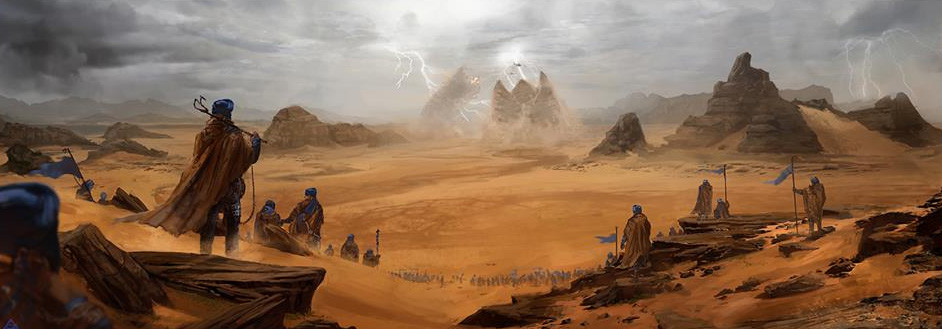
DUNE - 50 years on: how a science fiction novel changed the world

From: Books | The Guardian

In 1959, if you were walking the sand dunes near Florence, Oregon, you might have encountered a burly, bearded extrovert, striding about in Ray-Ban Aviators and practical army surplus clothing. Frank Herbert, a freelance writer with a feeling for ecology, was researching a magazine story about a US Department of Agriculture programme to stabilise the shifting sands by introducing European beach grass. Pushed by strong winds off the Pacific, the dunes moved eastwards, burying everything in their path. Herbert hired a Cessna light aircraft to survey the scene from the air. “These waves [of sand] can be every bit as devastating as a tidal wave...they’ve even caused deaths,” he wrote in a pitch to his agent. Above all he was intrigued by the idea that it might be possible to engineer an ecosystem, to green a hostile desert landscape.

Sand dunes of the central Oregon coast
About to turn 40, Herbert had been a working writer since the age of 19, and his fortunes had always been patchy. After a hard childhood in a small coastal community near Tacoma, Washington, where his pleasures had been fishing and messing about in boats, he’d worked for various regional newspapers in the Pacific northwest and sold short stories to magazines. He’d had a relatively easy war, serving eight months as a naval photographer before receiving a medical discharge. More recently he’d spent a weird interlude in Washington as a speechwriter for a Republican senator. There (his only significant time living on the east coast) he attended the daily Army-McCarthy hearings, watching his distant relative senator Joseph McCarthy root out communism. Herbert was a quintessential product of the libertarian culture of the Pacific coast, self-reliant and distrustful of centralised authority, yet with a mile-wide streak of utopian futurism and a concomitant willingness to experiment. He was also chronically broke. During the period he wrote Dune, his wife Beverly Ann was the main bread-winner, her own writing career sidelined by a job producing advertising copy for department stores.

Frank Herbert
Soon, Herbert’s research into dunes became research into deserts and desert cultures. It overpowered his article about the heroism of the men of the USDA (proposed title “They Stopped the Moving Sands”) and became two short SF novels, serialised in Analog Science Fact & Fiction, one of the more prestigious genre magazines. Unsatisfied, Herbert industriously reworked his two stories into a single, giant epic. The prevailing publishing wisdom of the time had it that SF readers liked their stories short. Dune (400 pages in its first hardcover edition, almost 900 in the paperback on my desk) was rejected by more than 20 houses before being accepted by Chilton, a Philadelphia operation known for trade and hobby magazines such as Motor Age, Jewelers’ Circular and the no-doubt-diverting Dry Goods Economist.

Early paperback edition cover
Though Dune won the Nebula and Hugo awards, the two most prestigious science fiction prizes, it was not an overnight commercial success. Its fanbase built through the 60s and 70s, circulating in squats, communes, labs and studios, anywhere where the idea of global transformation seemed attractive. Fifty years later it is considered by many to be the greatest novel in the SF canon, and has sold in millions around the world.

Read more HERE.


----- --- -------

BOOK REVIEW: Zero! by Martin Caidin, Masatake Okumiya, Jiro Horikoshi

Zero!Zero! by Martin Caidin, Masatake Okumiya, Jiro Horikoshi
My rating: 4 of 5 stars

This is the thrilling saga of war in the air in the Pacific Theater of Operations during World War II told from the Japanese point of view. It is the story of the men who created, led, and fought in the deadly Zero fighter plane. In their own words, Jiro Horikoshi (who designed the Zero), Masatake Okumiya (leader of many Zero squadrons) tell the inside story of developing the Zero and Japan's air force. They tell what it felt like to bomb American ships and to shoot down American airplanes — and then of their shock when the myth of invincibility was shattered by the new Lightning, Hellcat, and Corsair fighters. They tell of the fight against the growing strength of a remorseless American enemy; and how, in desperation the Japanese High Command ordered the creation of deadly suicide squadrons, the Kamikaze. And finally they reveal their reaction to the dropping of the atomic bombs on Hiroshima and Nagasaki.

A very interesting book, told from the perspective of two Japanese men who were very closely involved with Japanese naval aviation. Not so much about the Zero fighter as about the whole Japanese WW2 war effort, specifically the war in the air waged over top of the huge naval battle groups amassed by both the Japanese and the Allies. After reading this book, one thing is abundantly clear and that is that the Japanese totally underestimated and were woefully unprepared for war against the USA and Britain and their allies. What we see is that they were so wrapped up in their own perceived superiority in morality, intelligence, discipline, training and technology to really notice how much of a chunk they'd bitten off. A few smart ones knew this, but the Japanese leaders persisted for years with their doomed agenda, bolstered by a few victories along the way. Ultimately, their backsides (and this unfortunately included the civilian population, not only the military) were well and truly kicked. The perfect example of this is the Zero, which was considered more than adequate for the job even as far better American designs began appearing. I guess I found myself becoming very frustrated with the overall Japanese attitude as I read this book, and as much as I feel ashamed to say it, they got what was coming to them, so to speak. To open hostilities with the USA by simultaneously bombing three military installations was to invite a huge backlash. It's a terrible, terrible shame that Japanese civilian collateral damage was so devastatingly high, but after reading this book I have to admit, once again, that we reap what we sow. The nation of Japan is one example. Overall, this book is a very good read, and a definite must-read for military history buffs. A very educational and sobering story with a solid lesson that came at a massive cost to all sides.

View all my reviews


02 June 2015

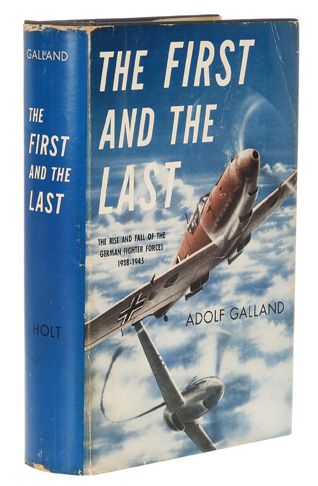
BOOK REVIEW: The First And The Last by Adolf Galland

The First And The LastThe First And The Last by Adolf Galland
My rating: 4 of 5 stars

A fearless leader with 104 victories to his name, Galland was a legendary hero in Germany's Luftwaffe. Now he offers an insider's look at the division's triumphs in Poland and France and the last desperate battle to save the Reich.

"The clearest picture yet of how the Germans lost their war in the air".--Time.


A first-hand account written by a man who was part of the upper echelons of the WW2 German Luftwaffe and also at the forefront of the air war over Britain and mainland Europe. There's many interesting insights into strategic decisions made by the German leaders, and Galland's in-person dealings with Hitler and Goring give us a rare look at the minds behind Germany's war effort. I found it fascinating how much of a hindrance the mindset of Hitler was against the defence of the German Reich, thus allowing Allied air forces to gain the upper hand and eventual air superiority over Europe. The case of the misuse of the brilliant new ME-262 turbojet aircraft is indicative of this and the sorry saga is told well by Galland in the later chapters of the book. I could sense the author's frustrations as he retells these events. While reading Galland's account I came to respect the man and his honor as a soldier. He was no Nazi, that much is clear, yet he did his best to carry out his sworn duty as a Luftwaffe officer. Political ideology doesn't appear in this book, but it's a candid account that is both interesting and educational, a must-read for anybody interested in military history.

View all my reviews


24 April 2015

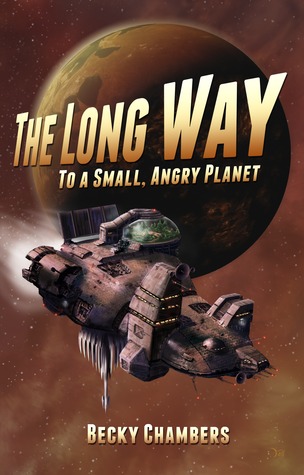
BOOK REVIEW: The Long Way to a Small, Angry Planet by Becky Chambers

My rating: 4 out of 5
When Rosemary Harper joins the crew of the Wayfarer, she isn’t expecting much. The Wayfarer, a patched-up ship that’s seen better days, offers her everything she could possibly want: a small, quiet spot to call home for a while, adventure in far-off corners of the galaxy, and distance from her troubled past. But Rosemary gets more than she bargained for with the Wayfarer. The crew is a mishmash of species and personalities, from Sissix, the friendly reptilian pilot, to Kizzy and Jenks, the constantly sparring engineers who keep the ship running. Life on board is chaotic, but more or less peaceful – exactly what Rosemary wants. Until the crew are offered the job of a lifetime: the chance to build a hyperspace tunnel to a distant planet. They’ll earn enough money to live comfortably for years… if they survive the long trip through war-torn interstellar space without endangering any of the fragile alliances that keep the galaxy peaceful. But Rosemary isn’t the only person on board with secrets to hide, and the crew will soon discover that space may be vast, but spaceships are very small indeed.

***** *** *******

This book is a fine example of an independently self-published book (subsequently re-published by Hodder & Stoughton) by a gifted storyteller. Here, Chambers has written the sort of book that I would love to write someday, one with interesting characters, interesting aliens and far-off, wonderful places.

The story isn't so much about the activities of the wormhole-creating starship Wayfarer but rather about the diverse crew members, and more specifically who they are. Each character has an interesting story that kept me intrigued, and their stories don't appear to be finished with this book so hopefully there's more to come.

Throughout the book, I had a definite sense that the author has something bigger to say, an axe to grind if you will, maybe about the diversity of people and how it's okay to be different, etc. I can't quite put my finger in what it is, and I don't know the author, but I felt her passion, and that made it even more interesting.

Overall, a really good character-driven story within a well-built universe with enough action and suspense to keep you hooked. I'll keep my eye on this author for sure. It's followed in the three-part series by Closed and Common Orbit.

Buy the ebook HERE (Amazon)
Buy the paper book HERE (Book Depository)


20 March 2015

BOOK REVIEW: Secret Journey to Planet Serpo: A True Story of Interplanetary Travel

Secret Journey to Planet Serpo: A True Story of Interplanetary TravelSecret Journey to Planet Serpo: A True Story of Interplanetary Travel by Len Kasten
My rating: 2 of 5 stars

On July 16, 1965, a massive alien spacecraft from the Zeta Reticuli star system landed at the Nevada test site north of Las Vegas. Following a plan set in motion by President Kennedy in 1962, the alien visitors known as the Ebens welcomed 12 astronaut-trained military personnel aboard their craft for the 10-month journey to their home planet, Serpo, 39 light-years away. In November 2005, former and current members of the Defense Intelligence Agency - directed by Kennedy to organize the Serpo exchange program - came forward to reveal the operation, including details from the 3,000-page debriefing of the 7 members of the Serpo team who returned after 13 years on the planet. 

Working with the DIA originators of the Serpo project and the diary kept by the expedition's commanding officer, Len Kasten chronicles the complete journey of these cosmic pioneers, including their remarkable stories of life on an alien planet, superluminal space travel, and advanced knowledge of alien technologies. He reveals how the Ebens presented the U.S. with The Yellow Book; - a complete history of the universe recorded holographically, allowing the reader to view actual scenes from pre-history to the present. He explains how the Ebens helped us reverse-engineer their antigravity spacecraft and develop technology to solve our planet-wide energy problems - knowledge still classified. 

Exposing the truth of human-alien interaction and interplanetary travel, Kasten reveals not only that the Ebens have returned to Earth eight times but also that our government continues to have an ongoing relationship with them - a relationship with the potential to advance the human race into the future. 

This is certainly as book of two quite distinct halves; Part One being an enjoyable essay on aspects of the UFO phenomena and it's well known Nazi connections, etc. I actually enjoyed this part of the book, and it certainly provides some good food for thought. There is so much smoke surrounding this issue that there's got to be the fire of truth hidden away in there somewhere, and this part of the book does a nice job of discussing the idea of a grand conspiracy and attempting to convince the reader. However, when we get into Part Two, things change for the worse. I'm not saying that I completely disbelieve the claims of a secret journey to the alien planet Serpo forty light years from Earth, but the book sure doesn't present the case all that effectively. What we have is a poorly written account made up from communications with someone named "Anonymous" who allegedly has access to information about this alleged mission. Large portions of the diary of the mission commander are reproduced that tell the story of the trip to Serpo and the thirteen year stay of a human crew hosted by the aliens. We are also presented with portions of transcripts of presentations to U.S. President Reagan where he is being briefed about the aliens and the missions, etc. Interspersed among the text are silly images of things like the cast of Star Trek, movie posters and numerous references to the movie Close Encounters Of The Third Kind (which is also allegedly based on the same story) and miscellaneous items mentioned in the text such as jeeps and automatic pistols. This all robs the story of credibility, and made it seem to me like a bit of a piss-take, and the text doesn't flow well. I'd really like to say that the book convinced me that there was indeed a secret journey to Serpo and a relationship built with another intelligent species in the Galaxy, but it unfortunately doesn't. I do plan to read Len Kasten's other book The Secret History of Extraterrestrials: Advanced Technology and the Coming New Race to see if he recovers and manages to convince to me what is possibly the biggest and most fantastic story in human history.

----- --- -------
View all my reviews

Photo allegedly taken from the surface of the planet Serpo

10 March 2015

BOOK REVIEW: Genesis by W.A. Harbinson

GenesisGenesis by W.A. Harbinson
My rating: 4 of 5 stars

GENESIS is a once-in-a-lifetime novel of searing terror and explosive excitement. There is a global conspiracy of such enormity that those who encounter even its outermost fringes are inevitably contaminated. A conspiracy based on incredibly advanced technology of 'Earthly' origin. A conspiracy dedicated to the eventual enslavement and subversion of humanity as we know it. A conspiracy stretching through time - across icy polar wastes and jungle hideouts... into the cold vacuum of space itself. A conspiracy poised to turn life on Earth into a chilling nightmare of living death. Unless... GENESIS is more - much more - than a gripping, frighteningly plausible story. It is the reading experience that will alter the way you look at your world... and your universe!

Every now and then a book like this comes along that I can really get into, get totally engrossed in and I don't want to put it down. I'd read some other reviews (most of which were positive) and it sounded fascinating, being an alternate history sort of story founded in actual events and myth. The story follows a UFO investigator on his search for the truth about UFO sightings and abductions and there are interesting side stories and flashbacks from key characters. What we end up with is a fast-paced adventure across the globe and across time that builds quite an epic story of global conspiracy. As I said, I had trouble putting this one down and I attribute this to the intriguing plot that one could almost imagine being factual. I did struggle a little with some of the dialogue at times which seemed a little odd and just there for the sake of it. However, these pieces were minimal and the book generally flows quite well. One of the best alternate history stories that I've read to date, and it's a good yarn that keeps you hanging in there for the next slice of the story.It's a good yarn that is just the right length to be 'epic' but not too much as to bore or grow tired of. Overall a very good book that I'll happily recommend to anyone who likes a meaty tale with lots of intrigue and mystery.

----- --- -------
View all my reviews


21 February 2015

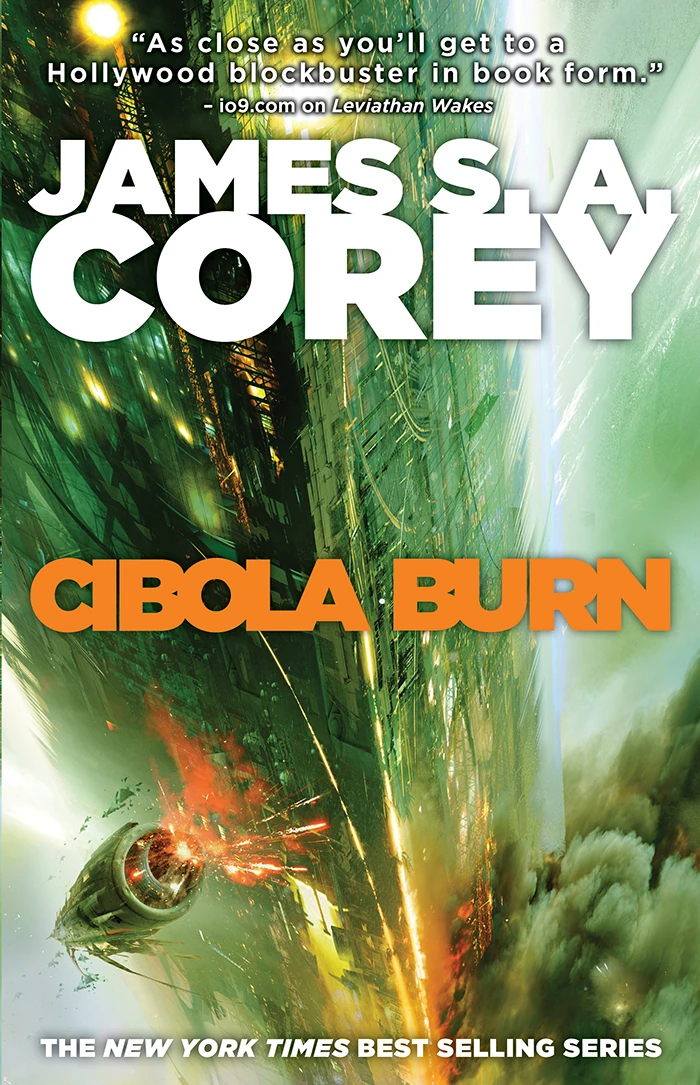
BOOK REVIEW: Cibola Burn (Expanse #4) by James S.A. Corey

Cibola Burn (Expanse, #4)Cibola Burn by James S.A. Corey
My rating: 4 of 5 stars

The gates have opened the way to thousands of habitable planets, and the land rush has begun. Settlers stream out from humanity's home planets in a vast, poorly controlled flood, landing on a new world. Among them, the Rocinante, haunted by the vast, posthuman network of the protomolecule as they investigate what destroyed the great intergalactic society that built the gates and the protomolecule.

But Holden and his crew must also contend with the growing tensions between the settlers and the company which owns the official claim to the planet. Both sides will stop at nothing to defend what's theirs, but soon a terrible disease strikes and only Holden - with help from the ghostly Detective Miller - can find the cure.


I've read The Expanse series from the first book and have been captivated by the story right from day one. This is book number four, and it was a slower read for me, not because it isn't any good, but because I found the story a little underwhelming initially. It's part of a larger series which has now been expanded to something like nine books, and a reasonably complex storyline it is too with quite a bit of political stuff going on behind the main action. In this book, we've finally escaped our own solar system, and the vast majority of the story unfolds either on or around planet Ilus which sits on the other side of one of the mysterious gates created by the alien protomolecule in the previous book. I'd rate this book as my favorite of the series so far, for the most part anyway, and the main reason for this is that now we've got alien artifacts and ruins to add a new sense of wonder and mystery, which is my favorite aspect of sci-fi in general. The book was quite unextraordinary for much of it, it must be said, apart from the previously mentioned alien enigmas. Don't get me wrong, I did enjoy reading it very much, and we meet a number of new and interesting characters, but it seemed a little dull and directionless for a part. Looking at the big picture, it isn't actually lacking direction at all, the first two-thirds are mostly about the political and ideological posturing of the parties involved in settling Ilus, things all quite critical to the story, but the action is a little sparse. The final third, however, takes off nicely and more than makes up for it. This is where there is the typical Expanse combat, explosions and noise. All good stuff, and fun to read. The epilogue gives a nice hint as to where I'm assuming the story will go next (in Nemesis Games due out in June 2015), and did actually round off the book really well, bringing everything into perspective and restoring some of that lack of direction that I felt earlier. Overall it's another good installment of this series and I'm looking forward to book five. I just wish this one hadn't loafed along so much in the early stages, and had it not been for this it would've been five stars. All of that said, Cibola Burn is still a thoroughly entertaining sci-fi space opera story that once again does credit to the authors.

----- --- -------
View all my reviews