21 May 2016

BOOK REVIEW: Deceived (Star Wars: The Old Republic #2) by Paul S. Kemp

Deceived (Star Wars: The Old Republic, #2)Deceived (Star Wars: The Old Republic #2) by Paul S. Kemp
My rating: 3 of 5 stars

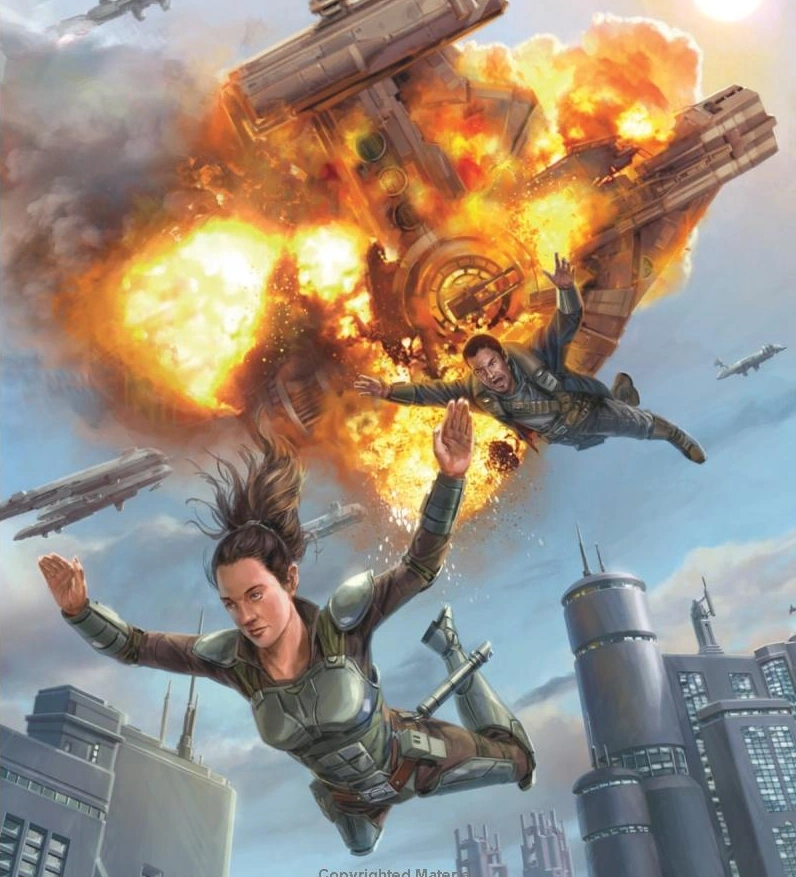
The second novel set in the Old Republic era and based on the massively multiplayer online game Star Wars: The Old Republic ramps up the action and brings readers face-to-face for the first time with a Sith warrior to rival the most sinister of the Order’s Dark Lords—Darth Malgus, the mysterious, masked Sith of the wildly popular “Deceived” and “Hope” game trailers.


----- --- -------

A well written Star Wars story set during the Old Republic era (around 3500 years before the days of Darth Vader and Luke Skywalker, etc.) and is centered around three main characters, Sith Lord Darth Malgus, Jedi Warrior Aryn Leneer and smuggler pilot Zeerid Korr. Each character is sufficiently developed to discern their inner motivations and see what drives them in their respective lives. I particularly liked following Malgus and, although generally very dark in nature, found myself enjoying his character immensely. It has a definite military sci-fi vibe within the classic space opera envelope and a story line which is nothing spectacular which ended exactly as I thought it would. But, this is totally fine and is what I was hoping it would be, that being an easy-flow, fun and action filled story set within one of the most fascinating fictional universes ever created. The world-building is good enough, but is possibly best enhanced by a prior knowledge of key Star Wars elements, ie. what an Imperial cruiser looks like, the various alien species and the planet Coruscant (where most of the book is set). I referred at times to an online Star Wars encyclopedia during my reading to gain some of the visuals. I imagine this book is read by most Star Wars fans due to the significance of Darth Malgus and his exploits in Sith folklore. It would surely also be enjoyed by the less ardent fan and general sci-fi reader, and overall it's a great fun read.


----- --- -------
View all my reviews


Are physical books back after a bad attack of "technodazzle”?

from Tor.com
by 

The book hasn’t had an easy time of it recently. Here, there and everywhere, headlines have alleged that the death of traditional print publishing is inevitable, and to date, these doom-laden declarations have been borne out by sales data that does indeed demonstrate a decline in the appetites of physical book buyers. But last week, a study by the Publishers Association revealed something surprising: that “sales of print books are rising, while digital sales are down for the first time since the invention of the e-reader.”

A couple of (clearly quite excitable) commentators have taken this to mean that “peak digital” is in the past—that the industry simply “suffered a bad attack of technodazzle” as ebook sales skyrocketed and the trade in printed editions fell commensurately.

Would that the fact of the matter was as straightforward as The Guardian’s Simon Jenkins thinks it is:
The book was declared dead with the coming of radio. The hardback was dead with the coming of paperbacks. Print-on-paper was buried fathoms deep by the great god, digital. It was rubbish, all rubbish. Like other aids to reading, such as rotary presses, Linotyping and computer-setting, digital had brought innovation to the dissemination of knowledge and delight. But it was a means, not an end.
The truth is that digital readers were never remotely in the same ballpark. […] Virtual books, like virtual holidays or virtual relationships, are not real. People want a break from another damned screen.
On his own blog, Damien Walter—he of the Weird Things—took Jenkins’ various claims to task:
If it’s fair to say that the more wishful the thinking, the less evidence it requires for celebration, then Jenkin’s thinking is the most wishful of all, as he presents hardly any evidence at all, and badly misinterprets the few data points he invokes.
A 5% rise in Waterstones’ print book sales is good news. It’s driven by colouring books sadly, a temporary hobby fad. Even with that temporary boost, Waterstones isn’t profitable. [And] the news that Waterstones has stopped selling Kindles is singularly irrelevant. If they stop selling Moleskines will that indicate the death of writing?
Jenkins killer “fact” is a fall in “digital content” sales of a few % points. Jenkins doesn’t mention that this is the same period [some] publishers jacked up the price of ebooks in an act of near criminal sabotage against their own authors.
Nor does he take into account the failure of the Publishers Association to account for the innumerable independent imprints and self-published success stories that have seen their ebook sales continue to climb.

So… what? It’s all a wash?

Well, no—it’s not that either. If anything it’s good news, because the report also found that “overall sales in the UK publishing industry sales were up to £4.4 billion in 2015, a small rise from £4.3 billion in 2014,” and that’s not even to speak of the remarkable growth of audiobooks, downloads of which increased almost 30% in that same period.

For my part, I find myself in agreement with the managing director of Penguin General Books, Joanna Prior, whose conclusions, though lacking drama, do paint a positive picture for the industry going forward:
Both the increase and decrease are too small […] for us to make any claims for big shifts in consumer behaviour or make predictions for what lies ahead. But I do think that any suggestion that the physical book is doomed can now definitively be refuted as we trade less neurotically in a more stable, multi-format world.
Could she mean that there’s a place for everyone at the party? That digital and physical editions can simply… co-exist?

Who’d have thunk it!


01 May 2016

12 Novel Adaptations That Should Get a Do-Over Reboot

Original article from io9.com

We’ve all been there: a favored book is snapped up for adaptation, with a whole lot of potential behind it: solid cast, crew, production values, etc. When it hits theaters, you walk out wishing that they’d done everything differently.

[Dune from 1984 is a classic example of this - it was complete s@#t, and is in dire need of a remake which may hopefully restore some of the honor of this classic SF novel.] --LS

It’s often said that the book is better than the movie, and there’s a long history of that being true, because the movie makers simply didn’t get what the book was about, or did any number of other things wrong.

But, the movie version of a book isn’t always inferior: just look at Blade Runner, Minority Report, Children of Men or Jurassic Park, with films that rival or even exceed their source material. It’s possible to get the book right, or to get a good version of it.

For all the complaining that people make about Hollywood not green lighting original projects, let’s face a reality: adaptations from books, reboots of old movies, and the general recycling of content will continue. With that in mind, here’s a few movies that we wish Hollywood would go back and do over again, hopefully better than before.

Read more HERE.
----- --- --------

01 April 2016

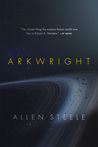
BOOK REVIEW: Arkwright by Allen Steele

ArkwrightArkwright by Allen Steele
My rating: 4 of 5 stars

Nathan Arkwright is a seminal author of the twentieth century. At the end of his life he becomes reclusive and cantankerous, refusing to appear before or interact with his legion of fans. Little did anyone know, Nathan was putting into motion his true, timeless legacy.

Convinced that humanity cannot survive on Earth, his Arkwright Foundation dedicates itself to creating a colony on an Earth-like planet several light years distant. Fueled by Nathan's legacy, generations of Arkwrights are drawn together, and pulled apart, by the enormity of the task and weight of their name.


----- --- -------


A very enjoyable book that will appeal to ardent sci-fi fans with it's many references to golden age science fiction personalities, places and events. The first half or so of the book follows the life and growing career of sci-fi author Nathan Arkwright, and it's from here that both his grand idea and the story grow out to become quite a grand tale.


The book follows the family of Arkwright through successive generations with whom we witness the building of humanity's first interstellar spaceship which is to go to and build a human colony on a world many light years away. It's a fun and interesting journey.


The story is more character driven than action driven, and this is okay because the characters are well crafted and fit the story well. What happens along the way, i.e. the action, was enough to keep me interested if not enthralled. The basic idea of the story really appeals to me, and has heaps of that "sense of wonder" element that keeps me so hooked on sci-fi.


Overall a good book by an author whose books I have found myself enjoying immensely.


----- --- -------

View all my reviews


20 March 2016

BOOK TEASER: Night Without Stars by Peter F. Hamilton

Here are details for Night Without Stars which is Peter F. Hamilton's next book in his series The Chronicle of the Fallers. This two-book series is a return to Hamilton's Commonwealth Universe, set in the same time-frame as the Void Trilogy, and tells the story of Nigel Sheldon and what happened when he broke into the Void.

I was particularly impressed with the first book The Abyss Beyond Dreams, giving it a solid five stars on Goodreads (read my review HERE), thus I'm positively drooling at he thought of following the story through to it's conclusion. It's to be released later this year on September 27th, and is available for pre-order in hardcover from the usual retailers. Presumably the ebook edition will follow soon after.

In the meantime, we'll need to be content with the synopsis and a glimpse at the cover art...

----- --- -------


Night Without Stars (The Chronicle of the Fallers #2)
by Peter F. Hamilton

The planet is isolated from the rest of the universe, unable to seek help as it's targeted by hostile aliens. Bienvenido's ruling authorities have slowly responded to this gradual infiltration. But they have no idea that a highly organized invasion is now underway, designed to wipe out all human life on the planet. All factions must work together to survive. But due to prejudice against enhanced 'Eliter' humans, and crippling technophobia, the parochial government won't collaborate. Kysandra, known as the Warrior Angel, heads up the Eliter resistance. With their enhanced capabilities and technological know-how, they could avert disaster. But only if the authorities stop hunting them at every turn. Then, as both resistance and government are caught in a desperate race to save lives, the planet receives an unexpected visitor. As events escalate, petty power-plays, politics and age-old prejudices may prove fatal. And as the more sophisticated hostiles can hijack a human body, humanity is undermined by spies within - wearing the faces of family and friends. Death will also fall from the skies, once the full invasion begins. Desperate times call for desperate measures or humanity on Bienvenido will not survive.


Visit Peter F. Hamilton's Goodreads page HERE for information about the author and his books.

06 March 2016

FREE STUFF: Read and download the entire run of If magazine

If magazine was a monthly science fiction magazine that was first published in 1952, and ran through 1974, before it was merged with its sister publication, Galaxy Science Fiction.

The magazine was moderately successful, though it was never regarded as one of the top tier of science fiction magazines and didn't meet with the same success as that of other magazines such as Astounding Science Fiction, The Magazine of Fantasy & Science Fiction or Galaxy Science Fiction.

It achieved its greatest success under editor Frederik Pohl, winning the Hugo Award for best professional magazine three years running from 1966 to 1968. Under Pohl If took on its own identity. Initially it had played second fiddle to Galaxy, but whereas Pohl kept the more select stories for that magazine, he turned If into a magazine for more adventurous and exciting sci-fi. Before long it was If that proved the more popular.

If was merged into Galaxy Science Fiction after the December 1974 issue, which was its 175th issue overall.

Now you can read online and download the entire run of If HERE thanks to the people over at Internet Archive.

Very cool.

----- --- ------


04 March 2016

BOOK REVIEW: Cosmopath by Eric Brown

Cosmopath (Bengal Station, #3)Cosmopath by Eric Brown
My rating: 4 of 5 stars

Necropath Jeff Vaughan is sent to investigate the disappearance of a crew on Canopus VII, where he discovers an underground city and a new alien race. 

Having been sent to Canopus VII to find out what happened to a lost crew, Necropath Jeff Vaughan finds himself drawn into a deepening mystery not only as to the fate of the crew but also the intentions of his benefactor.


----- --- -------

This is the final installment in Brown's Bengal Station series and it's a fine and fitting finale to what was, for me, one of the better "low-key" sci-fi series that I've read. I say low key because, as with much of Brown's other work, the story reads easily and is reminiscent of a fun pulp-style story from the sci-fi golden age. I mean this as a compliment, because there is a huge amount of enjoyment packed in there.

Cosmopath continues the story of Jeff Vaughan who is a telepathic investigator stationed on an orbital station above the Bay of Bengal. He's a likeable character and sticks with Brown's standard modus operandi of main characters who have no shortage of personal battles and vices that lend validity to and enrich the story. I guess it's because I can relate to Vaughan's internalizing and can see myself reacting in similar ways.

Also of huge enjoyment are the alien species and interplanetary space opera elements that are right up my alley, and we spend a large portion of this book enjoying the wonders of a planet light years away from Earth and home to a fantastic ecosystem and marvelous creatures.

It's all here, the elements that make up fun and enjoyable science fiction adventure. In most other reviews that I've written of Brown's work I've made the statement "Brown fails to disappoint", and I unashamedly say it again. I'm not sure how to put it any other way, but simply said, Brown is one of the best authors in the science fiction field today, and should go down as one of the greats, in my humble opinion.

Highly recommended, and definitely a series that I'd suggest for either a newcomer to science fiction or a seasoned fan who appreciates fun and easy to read stories.

----- --- -------
View all my reviews


14 February 2016

Eric Brown’s BENGAL STATION series


A favorite sci-fi series of mine, the Bengal Station novels by Eric Brown have been described as "science fiction meets crime noir" which is fairly apt, the main character being a jaded telepathic security specialist who is employed by the Bengal Station spaceport authorities.

The stories are well-paced and interesting, with plenty of action, interesting aliens and far-off planets. Brown is firmly entrenched as one of my favorite authors and I've not read anything from him that I haven't thoroughly enjoyed.

The following is an article by an excellent reviewer that was originally published about a year ago on SF SIGNAL, and which will give you a good rundown and overview of the series.

I hope you enjoy it.

----- --- -------

Written by Rob H. Bedford

Eric Brown has written and published just about one novel per year since his first in 1992. Many of those novels have published through Solaris Books, including his Bengal Station Trilogy. At their heart, the books of the series are modern Psychic Detective novels, albeit set on a space station in the future and involving aliens.  That “psychic detective” would be Jeff Vaughan, a cynical, distrustful man who, at times, is trying to run from his past. As the title of the series implies, the novels are set on (or launch from) Bengal Station, an interstellar orbiting above India and Thailand.

Jeff Vaughan is a telepath working on Bengal Station assisting the police in several investigations.  One of these investigations is related the death of Tiger, a young girl whom he befriended.  As Vaughan learns more about the cause of her death – overdose of an exotic drug called Rhapsody – a web of connections to a cult emerge and Vaughan’s life becomes increasingly endangered. He begins to suspect his supervisor, Weiss, of having connections to the illicit trade.  Vaughan’s pseudo-partner helps Vaughan in his secret investigations all the while trying to urge Vaughan to come out from behind the cold barrier he’s erected around himself.  As their investigations progress, Vaughan learns of a cult that worships a star god that, to this reader, had parallels the Great Old One Cthulhu.  All the while Vaughan and Chandra are moving along their investigation, Brown parallels their story with that of Tiger’s sister Su (a lady of the night) as Su searches for Tiger.
Brown layers Vaughan with plenty of faults: he’s drug addicted, a complete cynic, and possesses a dark and mysterious past, and Jeff has an inability to develop true human connections.  Despite these failings, or perhaps because of them, Vaughan comes across as a realistic character.  Even if he isn’t the type of guy you’d want to hang out with at the bar, he’s a character whose story is fascinating to see unfold and whose back-story I wanted to learn.
While the Bengal Station of the series title is the main setting of the novel, Vaughan and Chandra do travel off world to investigate a ritual of the cult, the Church of the Adoration of the Chosen One. We learn very little about Vaughan in the early part of the novel, rather, Brown uses this chunk of the novel to allow us to see the story through the eyes of Vaughan for most of it, with pieces from the point of view of Su and Chandra, as well as a character by the name of Osborne, whose connection to Vaughan comes to light near the end of the novel.
Brown makes Vaughan’s ability out to be more of a curse than a power he enjoys using.  Being able to read minds is not a pleasant thing and it takes a great deal for Vaughan to block out other’s thoughts.  Due to events in his past, he is even more reluctant to use his ability, but he often realizes inaction would bring him more guilt than action.  The whole idea of the telepathic individual and the background for the development of these individuals was very well-thought out by Brown, telepathy comes across as very plausible.
As this novel fits in the thriller/detective mold, Brown keeps the pace very high, making it difficult to set the book aside.  I felt I just could not put the book down unless I at least finished the chapter I was currently reading. I also liked the chapter titles and how they tied into the narrative.
Su’s clientele comes across in contrasts – matter of fact realism through her eyes relaying with shocking and at times horrifically grotesque.  Because of a gash on her face, she is something of a fetish to a certain tentacle alien. Here, I think, Brown is playing with the conception of non-Asians have of some of the ‘tentacle porn’ that is associated with Asian pornographic culture.  Along with this, Brown employs an “Engrish” dialect when he shows Su or her sister Tiger speaking, as well as other more subtle hints of both Thai and Indian culture.  This is no different than Mark Twain phonetically spelling much of the dialogue of his characters from the American South. Many of these elements could possibly be perceived as stereotyping, though as an outsider to much of this culture, I found it as Brown showing a diverse future culture that is distinctly more than the typical white-bread future culture that for many years was associated with Science Fiction. With Necropath simply the first of a three book series, Brown hasn’t shown all his cards for Jeff Vaughan despite hinting at what already looks to be a pot-winning hand.
The second book, Xenopath takes place about a year or two after the events of book one, with Jeff Vaughan and Sukara married and expecting their first child and Vaughan having removed himself from his previous life as one of the most prominent telepaths on Bengal Station. The frustration, anger, and distrust that were such a part of Jeff’s life in Necropath have been replaced with the loving comfort of his marriage. That is, of course, until and old associate comes looking for Vaughan with an offer. Jeff reluctantly agrees to work with his old associate since it is claimed the mind-reading will be less stressful and his wife and unborn child, he finds it hard to say no to the pay.
Vaughan is asked to look into the mysterious death of Robert Kormier, a xenobiologist, that is a biologist who studies alien biology. When he learns of the corporation for whom Kormier worked, Vaughan’s suspicious nature kicks into higher gear especially because Kormier was paid by a multi-national corporation (Scheering-Lassiter) to visit the planet Mallory, which is owned by the corporation. As part of the investigation, Vaughan must leave Bengal Station – 70 light years away to be specific where he meets a telepathic alien, or as the title indicates, a Xenopath.
Meanwhile, back on the satellite, a young girl by the name of Pham gives a glimpse of the dark underbelly of Bengal Station.  Also on the station is Jeff’s aforementioned wife and if the murderer can’t get to Jeff across the stars, then they’ll try to get to him through his wife.
The final book in the trilogy, Cosmopath, once again picks up some time (about four years) after the previous book. Jeff is approached by a very rich and powerful individual, Rabindranath Chandrasakar, with the task of reading the mind of a dead scientist who was sent on an expedition to a planet (Delta Cephei VII) with cache of potential resources. Jeff had an understandably difficult experience reading the mind of a dead person and is reluctant to go through the ordeal again. Vaughan is unwilling to leave his wife and child until he learns that his youngest daughter, Li, has contracted leukemia. When Chandrasakar offers completely funding Li’s treatment on the condition Vaughan work for him, our cynical telepath can hardly say no. This time around, Vaughan is once again forced to depart Bengal Station for his job, leaving his wife Su behind. Though both are uncomfortable with the situation, the both know it is the best option for the well-being of their daughter.
Jeff is not alone on Chandrasakar’s expedition, nor is he even the lone telepath. Another POV in this final installment of the trilogy is Chandrasakar’s lover, Das. Through her, we are able to see Jeff in a light outside of himself and shows some of the thoughts and reasoning from other characters on the recovery mission. She provides a good balance to Vaughan, calling him out for his cynicism and distrust of large organizations (be it the government for which she works or the company her lover owns), but despite their conflicting ideologies, a thin line of trust slowly builds between the two. As the novel rises to an exciting climax, Brown reveals that the mission Jeff and his team are going to recover found more than anybody expected including humans and aliens alike on the planet.
By the end, Brown introduces a larger galactic landscape than he initially showed the characters and readers, while bringing closure to Vaughan’s story (for now at least) and revealing just what a Cosmopath is. I’ve been a fan of Brown’s writing, though I haven’t read the entirety of his oeuvre.  While Kings of Eternity might be his strongest novel (and one of my favorite SF novels from the past handful of years), The Bengal Station Trilogy is a fun series that blends elements of science fiction, mystery and even dashes of cosmic horror in the Lovecraftian vein at time that should appeal to a lot more readers than I see talking about these books, they are highly readable and engaging novels and I don’t hesitate in recommending them.
What becomes clear over the course of these three books is how Brown sets up a framework for the series, but with each novel in the series, tweaks the dressing for that framework in fun and interesting ways.  Part of the fun in reading such books is revisiting with the characters in each installment.