05 December 2015

BOOK REVIEW: Mosquito Squadron by Robert Jackson


Mosquito Squadron by Robert Jackson
My rating: 4 of 5 stars

Summer 1943.

The Battle of Britain is over. But the Battle of Germany has just begun. 

By night and day, RAF and USAAF bombers drive deep into enemy territory, striking at the heart of Germany’s war effort. 

Squadron Leader George Yeoman, veteran of the skies, has orders to protect the bombers on their long-range missions. He and his men will support in the elusive de Havilland Mosquito, a versatile plane made from wood but capable of stinging the Luftwaffe and sucking the fight from its airmen. 

Across the channel, Major Joachim Richter, Yeoman’s counterpart and adversary, bravely leads his squadron out each night to intercept the Allied bombers before they destroy German cities. 

The fight will be long and gruelling, but engineers behind the scenes on both sides are racing to build a plane that may soon decide the battle, the fighter jet. 

Will Yeoman survive the fight or will this be his last? 

'Mosquito Squadron' is a classic WWII adventure story.


----- --- -------

A solid war yarn telling of combat trials and tribulations of an RAF Mosquito fighter-bomber squadron during World War Two, as they rove across Europe from their base in England to harass the enemy. It's quite a short book made up of chapters which follow each other chronologically but are almost standalone in the sense that each one tells a distinct little story and depicts a specific sortie or battle scene. There isn't really much of an overall plot, just the various happenings and exploits but these are described in rather good detail and in a nicely written style that flows very well. The author appears to have a good understanding of the more technical aspects of the subject matter such as the aircraft and weapons which adds a touch of authenticity to the story, you often feel like you're right there in the cockpit with the chaps. Parallel to the Mosquito squadron, we also see the action from the perspective of a German Luftwaffe fighter commander and he plays his part in the increasingly futile attempt to defend their homeland from the growing Allied advances from all sides. We witness trials of experimental aircraft and weapons, given a seat of the pants ride across Europe on marauding raids seeking the enemy and shown the destruction wrought by these courageous knights of the sky. It's a fun read, the only disappointment being the lack of an overall story, this making it a tad underwhelming to read and left me a bit flat after finishing it. If that "bigger picture" was complete I probably would've given it five stars. In a nutshell it's a good piece of war fiction that an enthusiast of good yarns will probably enjoy.

----- --- -------
View all my reviews


02 December 2015

BOOK REVIEW: New Earth by Ben Bova

New EarthNew Earth by Ben Bova
My rating: 4 of 5 stars

Award-winning author Ben Bova brings us New Earth, his latest tale of science fiction in his Grand Tour series.

The entire world is thrilled by the discovery of a new Earthlike planet. Advance imaging shows that the planet has oceans of liquid water and a breathable oxygen-rich atmosphere. Eager to gain more information, a human exploration team is soon dispatched to explore the planet, now nicknamed New Earth.

All of the explorers understand that they are essentially on a one-way mission. The trip takes eighty years each way, so even if they are able to get back to Earth, nearly 200 years will have elapsed. They will have aged only a dozen years thanks to cryonic suspension, but their friends and family will be gone and the very society that they once knew will have changed beyond recognition. The explorers are going into exile, and they know it. They are on this mission not because they were the best available, but because they were expendable.

Upon landing on the planet they discover something unexpected: New Earth is inhabited by a small group of intelligent creatures who look very much like human beings.

Who are these people? Are they native to this world, or invaders from elsewhere?

While they may seem inordinately friendly to the human explorers, what are their real motivations? What do they want?
Moreover, the scientists begin to realize that this planet cannot possibly be natural. They face a startling and nearly unthinkable question: Could New Earth be an artifact?


----- --- -------

A superb fun sci-fi story, an engaging yarn of interstellar exploration that yields some surprises. This is one of those books that reminds me of why I love science fiction so much; it displays the wonder and glory of new worlds, species and cultures, a wonder that makes me want to be right there, in the story with the characters. Yes, it's a tad cliche, but I was totally drawn in, and this is due not only to the storyline, but also to Bova's relaxed style and his reasonable and believable characters. If you're looking for a ground-breaking masterpiece of cutting edge science fiction, this is not it, but what it is is a fine space adventure with most of the elements that make this genre so enjoyable. If I had to classify it, I'd say this book is hard sci-fi within a sort of space opera matrix which floats around in the background. There's an amazing setting to explore in subsequent books (I hope) within a galaxy teeming with life and a serious threat to all of this life about to sweep through. All good stuff really, and it epitomises fun science fiction. Anyway, I really liked it and it's the fastest read that I've had in ages. A top notch story.

----- --- -------
View all my reviews


07 November 2015

BOOK REVIEW: Angel, Archangel by Nick Cook

Angel, ArchangelAngel, Archangel by Nick Cook
My rating: 3 of 5 stars

The Allies are advancing on Berlin in the dying days of the Second World War, but the Russians are plotting much more than the end of the Third Reich. Operation Archangel's aim is for Soviet troops to blast their way straight to the English Channel.

With fake Soviet tanks lined up near the German border in Czechoslovakia, two British spy pilots stumble across this elaborate charade. Wing Commander Robert Fleming and Rhodesian expatriate Piet Kruze become the front line in the effort to defuse the Russian scheme. But they must first penetrate the heart of the Nazi defences and steal the one weapon that can possibly destroy Archangel: the cream of the new generation of German jet fighter bombers.


----- --- -------

A fairly decent World War Two story story set during the later days of the war in Europe. The story is told from two sides, as Soviet generals prepare for a final assault that will finish off Nazi Germany, and a secret Royal Air Force test unit that tries to intervene in their plans, for reasons which become apparent through the story. The action is quite good and is plentiful and the characters are good, developed enough for the story and a fine mix of decent folks and devious bastards. This is one of those stories where I found my favourite character in one of the "baddies", a British traitor serving with the infamous Nazi SS Britisches Freikorps and who performs a crucial role in the final mission. A decent yarn with good action, intrigue and enough plot twists to keep it interesting. The story cruises along for the first 50% or so, and then ramps up rather nicely in tge second half. The ending is action-packed and ends rather abruptly, which is my only real criticism if the whole book. However, it's still a belting good yarn and I give it a solid 3.5 stars.

----- --- -------
View all my reviews


17 October 2015

BOOK REVIEW: The Truth About The Wunderwaffe by Igor Witkowski

The Truth About The WunderwaffeThe Truth About The Wunderwaffe by Igor Witkowski
My rating: 5 of 5 stars

THE TRUTH ABOUT THE WUNDERWAFFE is about the Third Reich's weapons of last resort, but it is a book unlike any other on the subject. The author, a former military journalist, has done extensive research on three continents, in the archives of many countries, and he has uncovered a wealth of facts about weapons and weapons systems unknown to the general public. This book is very well documented, and most of the sources have never before been presented in any publication. The main section is an analysis of a research project pertaining to a weapon that officially was and still stands beyond any normal classification-the Wunderwaffe, or, according to German documents, "a weapon decisive for the war." After its first release, THE TRUTH ABOUT THE WUNDERWAFFE became an instant classic. This fully updated and extended English edition bears the same unique tone of voice and style that defined the original.


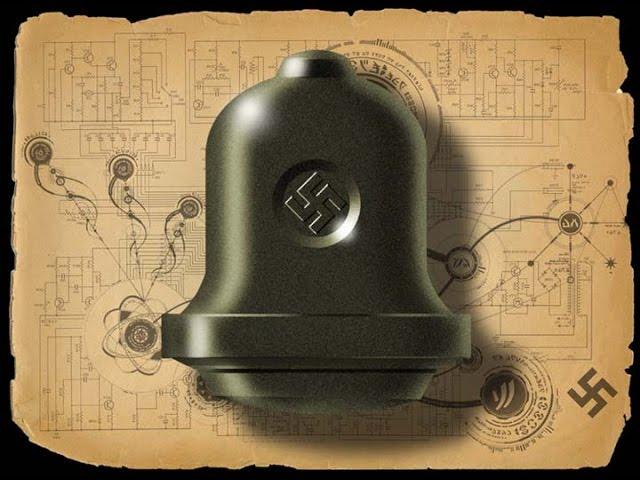
This is probably the most comprehensive book on this topic that I've yet seen. I got onto it because many other books on the subject cite this work and it's author as a source in their own research. Once I found out that there was an English edition available I just had to read it. The book goes over the whole gamut of proposed Nazi wonder weapons, from aircraft and missiles to biological and nuclear weapons research. The depth of Witkowski's studiy into these developments is incredible. The main reason that I chose to read it was because it is regarded as one of the best works dealing with the infamous alleged "Die Glocke" (The Bell) device that has been linked with anti-gravity research. There is a section of the book devoted entirely to this subject and it's fascinating, as much about the people involved with the project (many of whom are quite mysterious and enigmatic) as it is about the technology and physics involved. Overall it's a brilliant presentation of some equally brilliant research and well worth the time investment if you're into military history or speculative ideas.

----- --- -------
View all my reviews


24 September 2015

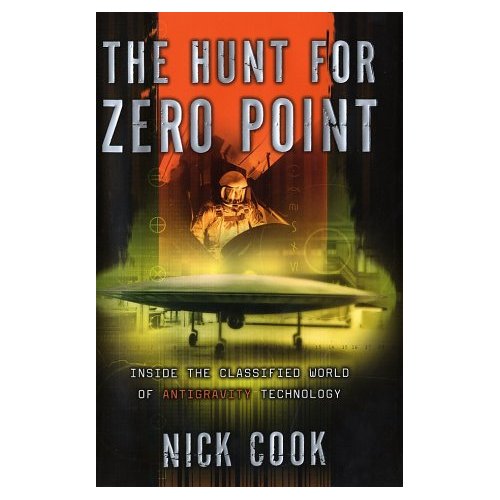
BOOK REVIEW: The Hunt for Zero Point: Inside the Classified World of Antigravity Technology by Nick Cook

The Hunt for Zero Point: Inside the Classified World of Antigravity TechnologyThe Hunt for Zero Point: Inside the Classified World of Antigravity Technology by Nick Cook
My rating: 5 of 5 stars

The atomic bomb was not the only project to occupy government scientists during the 1940s. Antigravity technology, originally spearheaded by scientists in Nazi Germany, was another high priority, one that still may be in effect today. Now, for the first time, an acclaimed journalist with unprecedented access to key sources in the intelligence and military communities reveals suppressed evidence that tells the story of a quest for a discovery that could prove as powerful as the atomic bomb.

The Hunt for Zero Point explores the scientific speculation that “zero point” energy—a limitless source of potential power that may hold the key to defying and thereby controlling gravity—exists in the universe and can be replicated. The pressure to be the first nation to harness gravity is immense, as it means having the ability to build military planes of unlimited speed and range, along with the most deadly weaponry the world has ever seen. The ideal shape for a gravity-defying vehicle happens to be a perfect disk, making antigravity tests a possible explanation for numerous UFO sightings during the past fifty years.

Drawn from interviews with those involved int the research and visits to labs in Europe and the United States, The Hunt for Zero Point is a captivating account of the twentieth century’s most puzzling unexplained phenomenon.


If there is a book to give a newcomer to the subjects of antigravity technology and secret science, then this would have to be the one. It's a very well written account of one man's search for information and the truth about these fascinating ideas. The author is a reputable aviation journalist in his own right which means the book is well researched and presented. His search takes him from the present day back to those secretive events surrounding the snatching of German scientists and technologies immediately after the German surrender in World War Two, and tries to connect the dots within the post-war US and Soviet military industrial complexes, to unravel the secrets of antigravity machine development and other associated technologies. I found the stories from the world of Nazi science totally engrossing, with so many intriguing ideas and personalities all driven by various motivations. I get the impression that we may be just beginning to discover the wonders from this dark time in Germany's history, and if one can look past the fanaticism of the Nazi regime and in particular Himmler's occult-driven SS (who ended up controlling most of the technology) you can see so much evidence of scientific and technical brilliance. A top-notch book, and the best overview of this amazing topic that I've read so far. I highly recommend it.

----- --- -------
View all my reviews


06 September 2015

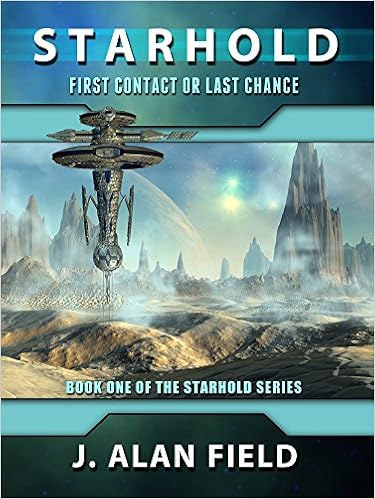
BOOK REVIEW: Starhold (Starhold Series Book 1) by J. Alan Field

StarholdStarhold (Starhold Series Book 1)
by J. Alan Field
My rating: 4 of 5 stars

Human civilization has fled to the stars, abandoning a poisoned and deserted planet Earth. Now, hundreds of years later, there is an accidental and shocking discovery: not only has Earth’s environment been completely restored, but someone (or something) has taken up residence on humanity’s ancient homeworld. At the same time, unidentified warships begin attacking human outposts. Are these events connected?

To meet the threat, the Sarissan Union dispatches agents Frank Carr and Etta Sanchez to discover the identity of Earth’s new residents. The pair have to work fast however, because following close behind them is a Sarissan war fleet, whose actions will depend on what Carr and Sanchez uncover. Will First Contact be followed by peace or war? Meanwhile, political intrigue in the Sarissan capital threatens to rip the Union apart before Carr and Sanchez even complete their mission. The future of not only Sarissa and Earth, but of all humanity hangs in the balance.

This novel can be enjoyed as a stand-alone story, but is also the first book in an upcoming space-opera series. Space battles, spies, political intrigue, and surprises abound in Starhold. 


I really like this modern self publishing scene and this fun indie sci-fi novel typifies, to me, what is good about indie books and authors. It had me hooked right from the start. The book tells the story of humanity that has spread out into neighbouring star systems and has formed a number of small political groups of planets called "Starholds". Upon this background it is discovered that their deserted and forgotten homeworld Earth (which is quarantined and effectively off-limits) is now playing host to someone or something after being left abandoned for centuries. What ensues is an enjoyable yarn about the mission to discover what us happening on Earth while also building the background scene of the Starholds and their political landscapes. The book is surprisingly well written, and there's really nothing to complain about, typographical errors typical of self-published books are almost non-existent and the language used is excellent. The world building is good, the characters are interesting and well formed and there is plenty of action to keep the story moving along at a nice pace. Overall this book is very good and looks like it's going to be part of a longer saga. Well done J. Alan Field, you have produced a nice work of science fiction here and I wish you much success. I will be watching with interest.

----- --- -------
View all my reviews


09 August 2015

BOOK REVIEW: Second Contact by Mike Resnick

Second ContactSecond Contact by Mike Resnick
My rating: 3 of 5 stars

It looked like a no-brainer to defense attorney Major Maxwell Becker. A starship captain has gone a little crazy and killed two of his crewmen in cold blood. Just plead insanity, make sure they give his client a nice, comfortable, padded cell, and go skiing at Aspen. But the captain refuses to cop an insanity plea. He insists that the two crew members he killed were not humans, but aliens. That's his story, and he's sticking by it. So Becker reluctantly goes through the motions of trying to prove his case - and suddenly his witnesses start getting transferred or disappearing, and when he finally finds one he realizes there are holes in his story... and suddenly Becker is running for his life, hunted by every branch of the military. He can't figure it out: he's a loyal officer, he's just doing his job as a military attorney, he's never broken a law, there are no aliens: so why does everybody want him dead? Join Hugo- and Nebula-winning author Mike Resnick as he chronicles Becker's desperate attempt to learn the only thing that can save him: the truth.


I selected this book as a quick read, safe in the knowledge that most things by Mike Resnick I enjoy. I didn't know anything about the book, read no reviews or even a synopsis, and embarked on what I was assuming would be a quick journey and a rewarding story. I also assumed that the story fitted into Resnick's wonderful "Birthright" universe, but it doesn't, it's a completely stand alone novel. It has a quick storyline that isn't really all that sci-fi, other than it takes place in the near future and there is a large element of computer hacking goings on. I loved the general plot and the premise of alien contact and also liked the Grisham-style lawyer saga that is the vehicle for the storyline. The stand out of the book for me would have to be Jaimie, a very likeable criminal computer hacker who resolves to help the main character Max Becker on his quest for truth. What I believe let the story down was the way the the action meandered around a bit too much with describing exactly how the protagonists carry out their various acts of skulduggery. I got somewhat bored more than once and found myself losing concentration. As well, the technological details in this book are very dated, right back in the '80s with dial-up modems and such things, but it was written back then so it would've been rather cool at the time I imagine. The plot is reasonably deep and Resnick does a fine job of weaving it all together into an easily-read tapestry of words where the author confirms again to me that he is one of the best storytellers that I've read of any genre. This book is far from his top work, but it's fun I don't regret reading it one bit, but it wasn't all that rewarding like I'd hoped for at the beginning.

----- --- -------
View all my reviews


07 August 2015

Are we alone? Science Fiction is as sure a guide as any

From: Books | The Guardian

Any truth humans can find ‘out there’ remains speculative, and science and fiction are both still telling stories.

 Artist’s impression of a red Super-Earth in the planetary system around Gliese 581. More than 20 light years away from Earth, it is believed to be the most intriguing world found so far in the search for extraterrestrial life.
Photograph: AFP/Getty Images

Are we alone? There are so many possible ways to begin to answer this question. The backstory on the Fermi Paradox – why we haven’t encountered aliens yet – reads like science fiction. Certainly, the scenarios it sets out are all consigned to the realm of storytelling for now, and even the most logical theories may turn out to be wildly inaccurate. For this reason, the science and fiction of alien contact have much in common, with speculation on the subject sometimes more useful than empirical approaches.

The idea of an intertwining between science and fiction on this subject has historical underpinnings. Early scientific papers in the west by the likes of Francis Bacon and Johannes Kepler took the form of “contes philosophiques” or “philosophical tales”, in which the fictional framework of an imaginary or dream journey surrounded some sort of scientific speculation. In the late 1800s, some scientists even presented their findings in the form of poetry.
Read more HERE.