24 December 2016

BOOK REVIEW: Rogue One - A Star Wars Story by Alexander Freed

Rogue One - A Star Wars StoryRogue One - A Star Wars Story by Alexander Freed
My rating: 4 of 5 stars

As the shadows of the Empire loom ever larger across the galaxy, so do deeply troubling rumors. The Rebellion has learned of a sinister Imperial plot to bring entire worlds to their knees. Deep in Empire-dominated space, a machine of unimaginable destructive power is nearing completion. A weapon too terrifying to contemplate . . . and a threat that may be too great to overcome.

If the worlds at the Empire s mercy stand any chance, it lies with an unlikely band of allies: Jyn Erso, a resourceful young woman seeking vengeance; Cassian Andor, a war-weary rebel commander; Bodhi Rook, a defector from the Empire s military; Chirrut Imwe, a blind holy man and his crack-shot companion, Baze Malbus; and K-2SO, a deadly Imperial droid turned against its former masters. In their hands rests the new hope that could turn the tide toward a crucial Rebellion victory if only they can capture the plans to the Empire s new weapon. 


But even as they race toward their dangerous goal, the specter of their ultimate enemy a monstrous world unto itself darkens the skies. Waiting to herald the Empire s brutal reign with a burst of annihilation worthy of its dreaded name: Death Star.


----- --- -------

For the combined reasons of not being able to wait to see the movie and being stuck in bed running a temperature with 'flu, I read this novelization with interest and enthusiasm over the course of a couple of days. I'd seen the Rogue One movie trailers, of course, and some amazing concept artwork, which meant that I found myself with some comprehensive imagery for my mind's eye to make use of. This definitely helped me speed through the story with no effort. With no detailed plot points or spoilers from the screen version to influence my thoughts, I was hitting to story with minimal preconception.

To the book itself: I have to be honest and say, the first half of the book was very good and had me hooked from the kick off, but it just seemed to fall a little flat for the third quarter. This was taken up largely with the epic battle where Jyn Erso and her rebel comrades attempt to secure the plans for the Death Star. It just seemed to go on and on without really accomplishing much in terms of the story line. But, if action is your thing, you're going to love it. Right near the end it came good again and I thought the end chapter (and particularly the Epilogue) was great, a fitting end to this story which is a stand alone but which also has hints of coming events in A New HopeWe catch a glimpse of a few characters that we've seen and known before plus see others who are more prominent players like Tarkin and Vader.

Overall it's fine and I give it an actual 3.5 stars, but it's not one of the best Star Wars novels that I've read. It's a solid tale that fits nicely beside the main Star Wars story arc and fleshes out the universe with some good characters and other elements. I just felt that the story got bogged down a bit during that big battle phase. I'm still as eager as ever to see the movie, possibly even more so, and am equally as eager to see the what other projects that come out of the new and revitalized (a matter of some debate in fandom it would seem...) Star Wars franchise.

----- --- -------
View all my reviews


08 December 2016

How Will Our Religions Handle the Discovery of Alien Life?

By DAVID A. WEINTRAUB
@ Nautilus


What would your priest, rabbi, or imam say if we discovered alien life?

For the religious, knowing that life on Earth is not unique may demand radical new ways of thinking about ourselves: How special and sacred are we? Is Earth a privileged place? Do we have an obligation to care for beings on other planets?  Should we convert ET to “my” religion? These questions point to a deeper issue about whether our religions can adapt to the idea that humans are not the only sentient beings in the universe capable of worshiping God.

Some faiths might unearth new meanings in ancient texts and develop ways of incorporating alien life into their world-views. Other religions that are less flexible in their interpretations of scripture or that claim humans are the only intelligent beings in the universe might struggle to adapt.

Whether we are believers or not, none of us can fully escape the influence of religion in our culture. Religion is one of the oldest parts of our social fabric, and is one way—perhaps the main way—that society will process first contact. Here is a brief list of how some religions think about aliens, whether they will try to proselytize them, and which religions are likely to remain intact in the wake of the potential discovery of alien life.

Read more HERE.


14 November 2016

BOOK REVIEW: The Invincible by Stanisław Lem


The InvincibleThe Invincible by Stanisław Lem
My rating: 4 of 5 stars

The interstellar cruiser Invincible lands on Regis III, which seems bleakly uninhabited, to investigate the loss of sister ship, Condor. The crew discovers a form of quasi-life born through evolution of autonomous, self-replicating machines. Individually or in small groups they are harmless and capable of only simple behavior. When bothered they form huge swarms displaying complex behavior arising from self-organization and are able to defeat an intruder by a powerful surge of EMI. Some members of the crew suffer complete memory erasure as a consequence. Big clouds are also capable of high speed travel to the troposphere. The angered crew attempts to fight the enemy, but eventually recognize the meaninglessness of their efforts in the most direct sense of the word.
The novel turns into an analysis of the relationship between different life domains and their place in the cosmos - a thought experiment demonstrating that evolution may not necessarily lead to dominance by intellectually superior life forms. The plot also involves a Conrad-like dilemma, juxtaposing human values and the efficiency of mechanical insects.

----- --- -------

An interesting albeit dated hard sci-fi tale of a starship sent to a planet in search of a missing vessel and crew sent there previously. It's an easy read and relatively short, with a simple yet complex (if that makes sense) story of discovery and realization that "life" in the universe can come in unexpected forms and along varied evolutionary paths. I liked the sense of wonder of the the journey of discovery through the story. As a negative, I found the characters a bit boring and uninteresting for the most part. I just never got to know them, so to speak, and had this aspect been a little more engaging, then I feel the story would have been taken another level. This is how I often feel about older science fiction books from authors such as Arthur C Clarke, great story ideas but minimal and often lackluster characterization, to my more modern tastes, anyway. Overall it was enjoyable, but definitely more of a seasoned sci-fi fan book than one for the "uninitiated". I just found out that the edition that I read was translated from the original Polish via German into English, so maybe this could account for some of the one dimensional characters and their portrayals? I'm going to assume so, and give Mr. Lem the benefit of the doubt.

----- --- -------
View all my reviews


13 November 2016

BOOK REVIEW: A Night Without Stars (Chronicle of the Fallers #2) by Peter F. Hamilton

A Night Without StarsA Night Without Stars by Peter F. Hamilton
My rating: 5 of 5 stars

The planet of Bienvenido is on its own, isolated from the rest of the universe. And it’s waging war against the ruthless Fallers, aliens which have evolved to conquer whole worlds. Kysandra is leading an underground resistance, aided by biological enhancements that give her a crucial edge. But she fears she’s fighting a losing battle. This is especially as the government hampers her efforts at every turn, blinded by crippling technophobia and prejudices against enhanced 'Eliter' humans. However, if the resistance and government can’t work together, humanity on this planet will face extinction – for the Fallers are organizing a final, decisive invasion. Bienvenido badly needs outside help. But the Commonwealth, with all its technological expertise, has been lost to them for generations. Desperate times will call for desperate measures, or humanity on Bienvenido will not survive.

----- --- -------

This was everything that I'd hoped it would be, an epic and satisfying conclusion to this pair of books set in PFH's truly awesome Commonwealth universe. Set a number of years after the events of the preceding Abyss Beyond Dreams, the pace never really lets up and there's action aplenty, including a very cool battle at the beginning where an old foe from the past makes another appearance. We're also given snippets of information about what has come before, background information that helps to flesh put the vast plot lines that Hamilton weaves.
As usual, there are cops and detectives as a key characters, all part of the mission to rid the isolated world of Bienvenido from the relentless and ruthless Fallers. Things have changed quite a lot for the planet since it's expulsion from the Void which was depicted in the previous book. Now we're beginning to see the use of modern Commonwealth tech and devices, and society is divided into factions that either have the use of this tech, welcome it and want more, as well as those who yearn for the old simple times prior to the expulsion (or Great Transition as they call it). This creates paranoid society that the Fallers take advantage of. There are even 20th century style rocket missions into orbit to nuke the Faller trees which ring the planet. Very cool.
The story ramps up very quickly as a new player is deposited on Bienvenido in an attempt to enact a final blow to the Fallers. As well as events on the planet itself, we learn of the other planets in the group that are also marooned in starless intergalactic space, light years from anything else.
Without going into more detail of the various plot elements which you will be generally familiar with if you've read the previous book, I'll summarize in saying that this book is classic PFH. It's excellent modern space opera and is huge fun to read. It's typically (for Hamilton) quite long, but it's by no means arduous. It's the best sci-fi that I've read this year, and it was well worth the wait.

----- --- -------
View all my reviews


29 September 2016

BOOK REVIEW: Binary by Eric Brown

BinaryBinary by Eric Brown
My rating: 4 of 5 stars

On what should have been a routine mission to the star system of 61 Cygni A, Delia Kemp finds herself shunted thousands of light years into uncharted space. The only survivor of a catastrophic starship blow-out, Delia manages to land her life-raft on the inhospitable, ice-bound world of Valinda, and is captured by a race of hostile aliens, the Skelt. What follows is a break-neck adventure as Delia escapes, fleeing through a phantasmagorical landscape. 
As the long winter comes to an end and the short, blistering summer approaches, the Skelt will stop at nothing to obtain Delia’s technical knowledge – but what Delia wants is impossible: to leave Valinda and return to Earth.


---- --- ------

Yep, as I thought: I enjoyed this very much. A "half-novel" in that it is the first installment of a two-part story that will be published next year as a single volume. It is quite typical of Brown's more recent sci-fi stories which have a distinctive pulp feel. I've mentioned this before in other reviews of Brown's work, and it's a style that I find myself liking a lot. There's more of a focus on the yarn and not so much on depth of character or world-building, etc. Many of Brown's other works show his prowess in those areas, but this one is pure fun. The story follows a scientist as she becomes marooned on an unknown alien world and her adventures there. The planet and the aliens are interesting without becoming a distraction to the overall, and rather simple, plot. The whole thing works because of some well used tropes and overall it blends together into a cohesive whole that is a satisfying read. It's what I think of as a great bedtime read that doesn't tax your mind but keeps you interested with a sense of wonder which is a facet that Eric Brown does so well.

----- --- -----
View all my reviews


18 September 2016

6 Reasons Science Says You Should Read A Book

Anybody who knows me will tell you that I love books and reading. The written word is a most incredible medium for presenting information whether that be fictional literature or factual stuff, because it involves the mind like no other. As a huge bonus I get to enjoy some escapism, to be semi-separated from my surroundings. I find this immensely relaxing and a great sanity maintaining exercise.

TV? You can shove that (apart from the odd motorcycle race or Rugby match...), some movies are okay if the story line is good, but books are the bees knees.

Anyway, below are a few scientifically proven benefits to reading books which confirm what we already knew, really.

----- --- -------

BY JUSTIN GAMMILL
from iheartintelligence.com

1. READING BOOKS MAKES YOU A BETTER PERSON

In 2013, Emory University did a study that shows that people who read fiction are more empathetic. Researchers compared the brains of people after they read to the brains of people who didn’t read. The brains of the readers showed more activity in certain areas than those who didn’t read. Specifically, in the central sulcus of the brain, the primary sensory region, which helps the brain visualize movement. When you visualize yourself performing an action, you can actually somewhat feel yourself in the action – hence the popularity of 50 Shades of Grey, I suppose. A similar process happens when you envision yourself as a character in a book: You can take on the emotions they are feeling.
The researchers concluded that people who take on the emotions of characters in a book show a heightened sense of emotional awareness, making them more empathetic. Empathy towards those around you makes you more sensitive to the emotional state of people around you.


2. READING IMPROVES SOCIAL SKILLS

So if reading makes you more empathetic, technically it improves your social skills all around. A study that was published in the journal Science found that after reading literary fiction, people performed better on tests measuring empathy, social perception and emotional intelligence. These are all skills that come in especially handy when you are trying to read someone’s body language or gauge what they might be thinking.
The abstract from the study states: “Understanding others’ mental states is a crucial skill that enables the complex social relationships that characterize human societies. Yet little research has investigated what fosters this skill, which is known as Theory of Mind (ToM), in adults. We present five experiments showing that reading literary fiction led to better performance on tests of affective ToM.”


3. READING IS GREAT FOR YOUR RELATIONSHIP

According to relationship expert and psychotherapist Ken Page: “Research shows that people can grow closer by revealing and sharing new thoughts, ideas and fantasies with each other, [and] reading a book and then discussing it is a fun and entertaining way for couples to grow closer.”
Even Ella Berthoud, a bibliotherapist at the School of Life in Bloomsbury, London said, “One of the joys [of reading together] is that you discover new aspects of each other, or you may rediscover a connection you had.”
You read it here, folks – reading is sexy.


4. READING PREVENTS ALZHEIMER’S

A 2001 study in the Proceedings of the National Academy of Sciences, questioned 193 people about their participation in 26 different hobbies like physical activities, like gardening and knitting, intellectual hobbies like reading, and passive ones such as television viewing. They found that elderly people who regularly read or play mentally challenging games are 2 ½ times less likely to have the debilitating illness, which affects 4 million Americans.
The study’s main author, Dr. Robert Freidland, claims people who don’t exercise their gray matter stand a chance of losing brain power.


5. READING IS RELAXING

Dr David Lewis from the research group Mindlab International at the University of Sussex found that after test subject’s stress levels and heart rate were increased through a range of tests and exercises; they only needed to read, silently, for six minutes to slow down the heart rate and ease tension in the muscles. In fact it got subjects to stress levels lower than before they started.
Reading reducing stress levels by 68%. Listening to music only reduced stress levels by 61%, having a cup of tea of coffee lowered them 54%, and taking a walk lowered stress levels by 42%.
Dr Lewis said: “Losing yourself in a book is the ultimate relaxation. It really doesn’t matter what book you read, by losing yourself in a thoroughly engrossing book you can escape from the worries and stresses of the everyday world and spend a while exploring the domain of the author’s imagination.


6. READING SHARPENS YOUR BRAIN

This study in Neurology®, the medical journal of the American Academy of Neurology, author Robert S. Wilson, PhD says: “Our study suggests that exercising your brain by taking part in activities such as these across a person’s lifetime, from childhood through old age, is important for brain health in old age.
For the study, 294 people were given tests that measured memory and thinking every year for about six years before their deaths at an average age of 89. After they died, their brains were examined at autopsy for evidence of the physical signs of dementia, such as lesions, brain plaques and tangles.
The research found that people who participated in mentally stimulating activities, like reading, both early and late in life had a slower rate of decline in memory compared to those who did not participate in such activities across their lifetime. Mental activity accounted for nearly 15% of the difference in decline beyond what is explained by plaques and tangles in the brain.
“Based on this, we shouldn’t underestimate the effects of everyday activities, such as reading and writing, on our children, ourselves and our parents or grandparents,” said Wilson.


04 September 2016

‘Alien cliques’ may be keeping Earth isolated says study

by unknown author
from www.rt.com

If the idea really is true that aliens are deliberately preventing humans from contacting them, then extraterrestrial civilizations most likely formed a number of cliques rather than a pan-galactic government, a new study suggests.

The Fermi paradox – named after physicist Enrico Fermi – says that if sentient life is not unique to Earth, then our galaxy should have plenty of other civilizations, including some more technologically advanced than ours. The paradoxical part is that we have not detected any signs of them.

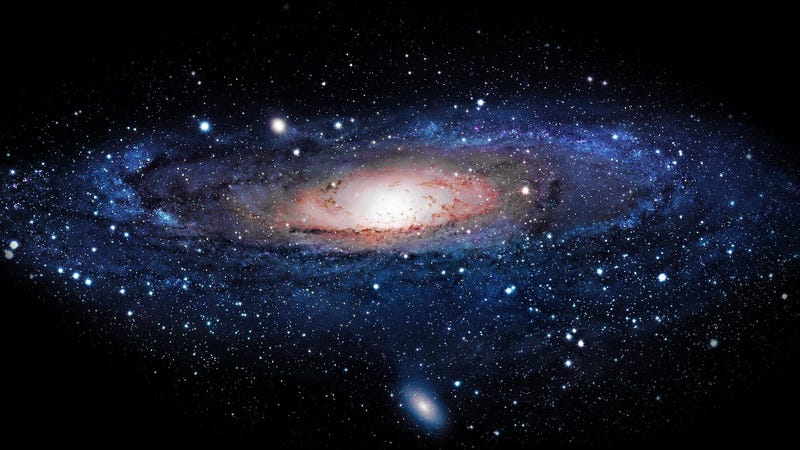
Our galaxy - teeming with life?
A supposition called ‘the zoo hypothesis’ is one possible solution for this conundrum, and states that alien civilizations are for some reason deliberately keeping humans from detecting any extraterrestrial life.

One problem with this answer is that it would require the galactic community to form a united government to agree on and enforce such an information blockade. In a paper published online this week, astrophysicist Duncan H. Forgan used a model which showed that if there are indeed multiple civilizations in the Milky Way, they are much more likely to form a number of cliques than a single galactic club.

The model accounts for a number of factors, including the time when each civilization advances enough to participate in interstellar communication, the distances between their origin worlds, and the lifetimes of the civilizations.
“We find that for there to be only a single group (a ‘Galactic Club’), the mean civilization lifetime must be extremely long, and the arrival time between civilizations must in fact be relatively short. This is perhaps an unlikely scenario, as it would require a large number of civilizations to emerge across the galaxy in a very short time frame,” the paper said.
The study also found that a single long-lasting civilization arriving early in the galaxy’s history would still be unlikely to knit all civilizations into a united club. But if all civilizations arrived relatively uniformly and lasted much longer than a million years, then such a club could exist.

A more likely scenario however is that there are multiple conflicting cliques of civilizations that cannot agree on a universal policy.
“One clique attempting to place an interdict on contacting ‘primitive’ civilizations is likely to encounter significant problems if another clique disagrees,” Forgan said.
“It may well still be the case that the Earth resides in a region of space occupied by a conservative clique bent on non-contact,” the paper added.
“However, as our ability to detect unintentional signals from both living and dead civilizations increases, we should presumably be able to break the deadlock imposed in this scenario.”
The paper was published on the pre-print website arXiv.org.


02 September 2016

A New Documentary Promises to Prove We're Not Alone in the Universe

by Germain Lussier
from io9.gizmodo.com


Film distributor The Orchard just picked up the rights to release a documentary called Unacknowledged: An Exposé of the Greatest Secret in Human History. The company is planning on putting it out in 2017, and its press release has some of the loftiest and, frankly, most exciting/unbelievable claims imaginable.

We love it.

According to a press release, the film will present “the best evidence of extraterrestrial contact dating back decades, with over 100 hours of top-secret military, corporate and intelligence whistleblower testimony, documents, and UFO footage.”

How? Well, director Michael Mazzola reportedly focuses his film on Dr. Steven Greer, “an emergency doctor and founder of the global Disclosure Movement who has briefed many senior government officials, including the CIA Director, Pentagon Admirals and Generals and senior members of Congress.” Greer is very confident in this findings.

“We are excited to have the support and distribution heft of The Orchard for this historic documentary film that establishes that we are not alone in the Universe,” said Dr. Steven Greer in the release. “It is time for the truth to be known and we are honored to have The Orchard as a partner in this effort.”

“There’s no question, no matter your beliefs, that Dr. Greer has tirelessly and consistently exposed startling revelations about UFOs, technology and the secrets being kept from the American public,” added Paul Davidson, EVP Film and Television for The Orchard. “We are thrilled to be partnering with him to bring his most stunning work to the widest audience possible.”

Here’s an early trailer for the film:


Now does anyone think this film actually will prove anything? Of course not. But I love this kind of stuff and I can’t wait to see what findings, footage and more brought about such positive feedback.

Unacknowledged: An Exposé of the Greatest Secret in Human History will be released in 2017.

----- --- -------